How to Get Paint Out of Clothes: A Guide by Paint Type
Compiled and fact-checked from cited sources, reviewed by our editorial team.
Two questions decide how this ends, and both get answered in the first minute: is the paint water-based or oil-based? and is it still wet or has it dried?
The answers change the method completely. Chase a water-based paint with white spirit and you damage the garment and yourself for nothing; scrub at oil paint with soapy water and you work it deeper into the weave. So do not skip the first section — everything after it depends on that answer.
There is also one prohibition that belongs right at the top: do not tumble-dry the garment, and do not iron over the mark, until the stain is completely gone. Heat sets the stain permanently into the fibre, and after that no method gives a clean result.5
Step 0: Identify the paint
If you still have the tin, read it — that is the fastest route. If not, use this table.
| Paint | Group | What dissolves it |
|---|---|---|
| Emulsion / latex wall paint | Water-based | Water and detergent (while wet) |
| Acrylic | Water-based but turns to plastic when dry | Water when wet; alcohol or acetone when dry |
| Gouache | Water-based, gum arabic binder | Water — the easiest of all |
| Watercolour | Water-based | Water |
| Oil paint, alkyd, enamel | Oil-based | White spirit, turpentine, mineral spirits |
| Spray paint | Usually acrylic or alkyd, very thin film | Alcohol or acetone |
| Oil pastel | Wax and oil binder | Treat as a grease stain: detergent or solvent |
| Soft (dry) pastel | Loose pigment, almost no binder | Shake it off dry first |
| Screen-print ink | Plastisol / screen printing | Bonded to the garment; a separate case |
No label? Quick test: dab a hidden corner of the stain with a cotton bud and rubbing alcohol, then wait 30 seconds. If the paint softens and colour transfers to the cotton, it is water-based. If nothing happens, it is oil-based.
Five rules that apply before any method
- 1. Lift the excessScrape off any paint sitting on the surface with the back of a spoon or a card. Do not wipe it with a cloth; wiping spreads it.
- 2. Work from the backTurn the garment inside out and apply water or solvent to the reverse of the stain. The paint then leaves the way it came in. Pressing from the front drives it deeper.
- 3. Put a cloth underneathLay a folded white towel under the stain. White matters: you can see whether paint is transferring, and no dye from the towel moves into the garment. Shift to a clean part as it takes up colour.
- 4. Blot, do not rubWork with a press-and-lift motion. Rubbing opens the fibres, pushes paint into them and leaves the fabric fluffed.
- 5. Cold waterUntil you know the paint type, do not use hot water. Heat sets many paints and stains.
Method A — Water-based paint, still wet
The easy scenario. Emulsion, acrylic, gouache and watercolour all belong here.
- Scrape off the excess.
- Turn the garment inside out and run cold water through the back of the stain. Most of the paint leaves at this step.
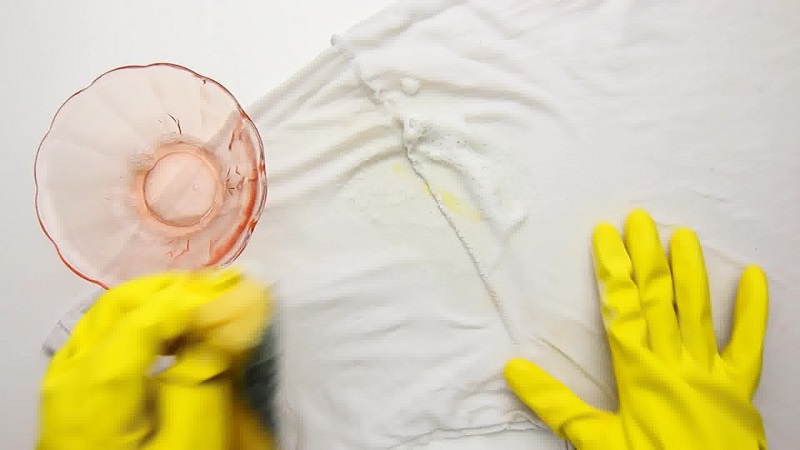
- Mix equal parts washing-up liquid and warm water in a bowl.
- Blot the mixture into the stain with a clean sponge, leave it a few minutes, rinse again from the back.
- Repeat the blot-and-rinse cycle until the mark fades. For stubborn residue you can use a soft toothbrush with short, light strokes.
- Wash the garment on its own, at the lowest temperature its label allows.
- Do not machine-dry it. Air-dry and check once it is dry — a stain that looked clean while wet can come back.
Never wash a paint-stained garment with other laundry. Dissolved paint goes into the wash water and spreads through the whole load. Trying to save one item and dyeing an entire drum is the most common and most expensive mistake in this job.
Method B — Water-based paint, dried
The key fact here: acrylic and emulsion paint, once dry, is no longer a stain but a thin plastic film. Water will not dissolve it, because curing is irreversible. So the strategy changes: soften and mechanically break the film first, then deal with the remaining pigment.
- Soak the fabric in warm water for 15 to 30 minutes; the film loosens.
- Lift the raised edges with a blunt knife or your fingernail. Do not force the fabric.
- Blot rubbing alcohol (isopropyl) into what is left and give it 10 to 15 minutes. Alcohol is the safest solvent for softening cured acrylic.
- Blot it away, rinse from the back, repeat if needed.
- If alcohol is not enough you can try acetone — but check the fibre content first (see the warning below).
- Lift the solvent residue with washing-up liquid, then wash the garment on its own.
On a thick, old, fully cured acrylic mark, the realistic outcome is usually significant fading rather than complete removal. Better to know that going in.
Method C — Oil paint, alkyd and enamel
Water does nothing in this group; a solvent is essential.
- Scrape off the excess. Never let the stain dry — the odds fall sharply once oil paint cures.
- Put a folded white towel under the fabric.
- Soak a clean white cloth with white spirit, turpentine or mineral spirits and press it against the back of the stain. The paint transfers into the towel underneath.
- Move to a clean part of the cloth as it picks up colour. Working with a dirty cloth puts the paint straight back.
- When the transfer stops, lift the solvent residue with washing-up liquid — skip this and you get a ring mark on the fabric.
- Wash on its own at the lowest temperature on the label and air-dry.
Open a window when working with solvents. White spirit, turpentine and acetone vapours are flammable and cause dizziness. Keep them away from cookers, boiler pilot lights and cigarettes, and wear gloves. Acetone strips the oils from your skin and thinners irritate it.4
Method D — Spray paint
Spray paint lands as a very thin layer and is usually acrylic or alkyd, so there is hope even after it dries.
- While wet: do not touch or smear it. Go straight to solvent.
- Try rubbing alcohol first; most spray paints soften with it.
- If that fails, use acetone: press a soaked cotton pad on for 10 to 15 seconds, then wipe in one direction.
- Clear the residue with detergent and wash the garment on its own.
Because spray paint sits on the surface of the fabric, the first treatment usually lightens it noticeably — but if pigment has settled between the fibres a ghost shadow can remain.
Method E — Gouache and watercolour
The easiest group. Both use a binder that re-dissolves in water, so even dried they open up again.
- Soak dried gouache in cold water for 10 minutes.
- Run cold water through the back; the colour leaves quickly.
- Washing-up liquid handles whatever remains.
Note that the pigment in some gouache and watercolour can leave a faint tint on pale fabric. That comes from the colourant rather than the binder and responds to a normal stain remover.
Method F — Pastel: two different things, two different routes
“Pastel” covers two materials that behave nothing alike, and mixing them up ruins the result.
Soft (dry) pastel. Almost no binder; it is coloured dust sitting on the fabric. Do not wet it first — wetting dissolves the dust into a genuine paint stain. The right order is:
- Shake the garment out outdoors; most of the dust falls away.
- Vacuum the rest (holding the nozzle just off the fabric) or lift it with a lint roller.
- Only then treat what remains with detergent and water.
Oil pastel. It contains wax and oil, so water-based cleaning fails and you must treat it as a grease stain:
- Scrape off the solid excess with a blunt edge.
- Apply washing-up liquid neat and leave it 15 minutes — detergent is a degreaser.
- If that is not enough, blot rubbing alcohol or white spirit from the reverse.
- Lift the residue with detergent and wash.
Screen-print ink and shirt prints: the honest answer
“How do I get print ink out of fabric” usually means one of two different things.
If printing ink has splashed onto a garment (screen-printing or plastisol ink), remember that this ink is designed to be cured with heat. If it has not been heat-set yet, water-based versions come out with water and plastisol with solvent. Once cured, it is permanently bonded.
If you want to remove the print from your own T-shirt, set expectations correctly: the print was applied to stay. Acetone, heat and scraping can lift some of it, but almost always leave a faint ghost, a stiffened patch or a fluffed surface underneath. If the garment matters to you, this is not worth attempting; if it does not, you have nothing to lose.
The special case of black and dark fabric
This is the most overlooked risk with solvent methods. Acetone, thinners and alcohol dissolve the fabric’s own dye as readily as they dissolve paint. The result is a pale, faded patch exactly where the stain was — you removed the stain and replaced it with a different one.
The protection is simple:
- Always test somewhere hidden: a seam allowance, inside the hem, the inner face of a pocket. Apply the solvent, wait 30 seconds, then press a white cloth on it.
- If colour transfers to the cloth, do not use that solvent on that fabric; step down to something weaker (acetone → alcohol → detergent).
- On dark fabric, do not spread the solvent widely; stay inside the edge of the stain.
- On black cotton, detergent plus a long soak is often safer than solvent, even though it is slower.
Hard limits by fibre type
- Acetate, triacetate, modacrylic: never let acetone touch them. Acetone dissolves these fibres; the fabric melts and holes appear wherever it touched.3 If the label says acetate, acetone is banned.
- Wool and silk: sensitive to alkalis and harsh solvents, and intolerant of rubbing. Go no further than gentle blotting with mild detergent and leave the rest to a dry cleaner.
- Nylon and polyester: more solvent-tolerant than cotton but heat-sensitive; never use boiling water.
- Leather and suede: no home method is suitable; you get water marks and stiffening.
- Interfaced or fused pieces (jacket and shirt collars): solvent dissolves the adhesive and the interfacing bubbles.
Can I use paint stripper?
No. Paint strippers sold for walls and wood are not for fabric. They are designed to break down binders and they break down textile fibres — synthetics especially — in exactly the same way. Traditional methylene-chloride strippers are also a serious health hazard and should not be used indoors.6
The harshest thing that belongs anywhere near fabric is acetone, and its limits are listed above.
When to stop
- The paint is dried, thick and oil-based, and the fabric is wool, silk or interfaced
- The stain has already been through the dryer
- The garment is expensive or has sentimental value
In those cases, continuing at home increases the risk. When you take it to a dry cleaner, tell them what kind of paint it is; “this is an alkyd oil paint” determines directly which solvent they reach for and improves the odds considerably.
Frequently Asked Questions
How do you get paint out of clothes? Identify the paint first. If it is water-based (emulsion, acrylic, gouache, watercolour), work from the back of the stain with cold water and washing-up liquid. For oil paint, blot with white spirit or turpentine, then lift the solvent residue with detergent. In every case blot rather than rub, and never machine-dry the garment until the stain is gone.
What removes paint stains from fabric? Washing-up liquid for water-based paint, rubbing alcohol for cured acrylic, white spirit or turpentine for oil paint, and alcohol or acetone for spray paint. Gouache and watercolour usually need nothing more than water.
How do you get oil paint out of clothes? Put a white towel under the fabric, soak a clean cloth in white spirit or turpentine and press it against the back of the stain, moving to a clean part of the cloth as it picks up colour. When the transfer stops, lift the solvent with washing-up liquid and wash the garment on its own. Do not let oil paint dry.
How do you get acrylic paint out of clothes? While wet, cold water and detergent are enough. Once dry, acrylic is a thin plastic film: soak in warm water for 15 to 30 minutes, lift the raised edges with a blunt edge, then blot rubbing alcohol into what remains. Acetone if necessary, but only if the fabric is not acetate.
How do you get emulsion paint out of clothes? Emulsion, or latex, wall paint is water-based. While wet, rinse from the back with cold water and blot with a detergent mixture. Once dry, follow the acrylic route: soak, lift mechanically, then alcohol.
How do you get spray paint out of clothes? Most spray paints are acrylic or alkyd and form a very thin layer. Try rubbing alcohol first; if that fails, press an acetone-soaked cotton pad on for 10 to 15 seconds and wipe in one direction. Clear the residue with detergent.
How do you get gouache out of fabric? Gouache is the easiest paint to remove because its binder re-dissolves in water. Even dried, a 10-minute cold soak and a rinse from the back usually does it; detergent handles any remaining tint.
How do you get pastel out of clothes? With soft dry pastel, shake and vacuum first — do not wet it, because wetting turns the dust into a real stain. With oil pastel, treat it as grease: scrape off the excess, apply neat washing-up liquid for 15 minutes, then add rubbing alcohol or white spirit if needed.
How do you get printing ink out of fabric? Uncured printing ink comes out with water if it is water-based and with solvent if it is plastisol. But a print that has been heat-cured is permanently bonded to the garment; attempts to remove it usually leave a faint ghost, stiffening or a fluffed surface.
How do you get paint out of black clothes? The same methods apply, with one added risk: acetone, thinners and alcohol can dissolve the fabric’s own dye and leave a pale patch. Always test on a seam allowance first, and if colour transfers to a white cloth, step down to a gentler product.
Does dried paint come out of fabric? It depends on the type. Gouache and watercolour come out with water even when dry. Acrylic and emulsion turn to plastic as they cure, so the usual outcome is marked fading rather than complete removal. Dried oil paint is the hardest of all.
Can I put a paint-stained garment in the washing machine? Not without pre-treating it — the machine alone will not remove paint. And when you do wash it, wash it on its own, or the dissolved paint will transfer to everything else.
Why must I not tumble-dry until the stain is gone? The dryer’s heat sets the stain permanently into the fibre, and no method gives a clean result afterwards. For the same reason, never iron over a stain.
Hot water or cold? Cold, until you know what the paint is. Heat sets many stains and speeds up acrylic curing.
Why is rubbing bad? Rubbing opens the fibres, pushes the paint between them and leaves the fabric fluffed. The correct motion is press and lift.
Why work from the back of the stain? The paint entered through the front. Pressing from the back sends it out the way it came in; pressing from the front drives it deeper.
Can I use acetone on any fabric? No. Acetone dissolves acetate, triacetate and modacrylic fibres, which melt wherever it touches. Read the label, and test somewhere hidden if you are unsure.
Can I use paint stripper on clothes? No. Strippers made for walls and wood break down textile fibres too, and methylene-chloride products carry a serious health risk indoors.
Do vinegar or lemon work? They have no meaningful effect on paint and can fade coloured fabric. Detergent is the right tool for water-based paint and solvent for oil-based.
Can I use bleach? Never on coloured fabric — it strips the colour. On white cotton it can be considered only for a ghost mark after the paint itself has been removed; it does not dissolve paint.
The stain came back after drying — why? An area that looks clean while wet can reappear once dry, because pigment deep in the fibre migrates to the surface as the water evaporates. Repeat the treatment and check after drying each time.
The label says dry clean only — what should I do? Do not experiment with water and solvents at home. Take it to a dry cleaner and tell them what type of paint it is; that determines the solvent they use.
How do I get paint off leather or suede? Home methods are not suitable; they leave water marks, stiffening and colour loss. Take the item to a leather specialist.
What can I do on wool or silk? Only gentle, brief blotting with a mild detergent, without rubbing. These fibres are sensitive to alkalis and harsh solvents; if the first attempt does not work, hand it to a professional.
I got paint on my skin — can I use the same solvent? Do not. Water-based paint on skin comes off with soap and water, and oil paint with cooking oil rubbed in first. Thinners and acetone irritate skin and strip its natural oils.
Sources
- American Cleaning Institute — Stain removal guide: paint stains, water-based versus oil-based. https://www.cleaninginstitute.org/cleaning-tips/clothes/stain-removal-guide
- University of Georgia Extension — Remove stains from paint. https://www.fcs.uga.edu/extension/stain-removal-paint
- Smithsonian Museum Conservation Institute — Stain removal and solvent-fibre compatibility. https://mci.si.edu/stain-removal
- NIOSH — Acetone: pocket guide to chemical hazards. https://www.cdc.gov/niosh/npg/npgd0004.html
- Clorox — Why dried and heat-set stains become permanent. https://www.clorox.com/learn/removing-stains-from-clothes-that-have-dried/
- US EPA — Methylene chloride in paint removers. https://www.epa.gov/assessing-and-managing-chemicals-under-tsca/methylene-chloride