How to Wash Curtains: Lined, Blackout, Linen and Velvet Without Ruining Them
Compiled and fact-checked from cited sources, reviewed by our editorial team. · Last updated:

Washing a heavy curtain is not the same problem as washing a net. A net is one fabric. A curtain is usually two or three layers — face fabric, lining, sometimes an interlining between them. Those layers do not shrink at the same rate, and that is almost always where things go wrong.
The fastest way to ruin a curtain is to think “30 °C will be fine” and put a lined panel in the machine. A cotton face shrinks 3–5 %, a polyester lining barely moves, and when the panel dries the face is shorter than the lining. What you get is puckering along every seam — a rippled, slightly bubbled surface. Ironing will not fix it, because the problem is not a crease. The two layers are simply no longer the same length.
First decision: can this curtain be washed at all?
If there is a label, the label decides. If there isn’t, the fabric decides.
| Curtain type | Construction | Verdict |
|---|---|---|
| Plain unlined polyester panel | Single synthetic layer | Machine — 30 °C, delicates |
| Cotton panel | Natural fibre, shrinks | Machine but cold; expect 3–5 % shrinkage |
| Linen panel | Shrinks a lot, creases readily | 30 °C delicates, low spin; creasing is normal for linen |
| Lined panel (separate lining) | Two fabrics, different shrinkage | Risky. Detach the lining if you can and wash separately |
| Blackout (coated) panel | Acrylic or PVC foam coating on the reverse | Only if the label allows; no heat, no fast spin |
| Interlined panel (three layers) | Face + bump + lining | Dry clean |
| Velvet | Pile surface, crushes | Never machine washed |
| Jacquard, brocade, tapestry weave | Heavy, structured weave | Usually dry clean |
| Silk and silk blends | Water-marks permanently | Dry clean |
| Pinch pleat or track-mounted panels | Sewn pleats, mechanisms | Pleats drop out; usually cleaned in place |
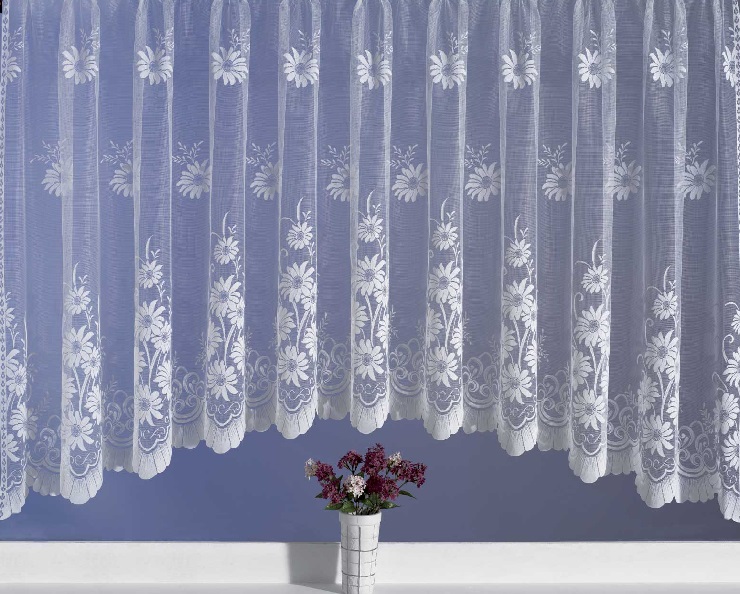
Sheer panels are a different subject entirely — different temperature, different spin, different whitener. I covered them separately in the guide to keeping nets white while washing them.
What the care symbols mean
- Number inside the tub: maximum temperature. One bar underneath means reduced action (delicates), two bars means very gentle.
- Crossed-out tub: not washable in water at all, not even by hand.
- Circle with a P: dry cleanable in perchloroethylene. Circle with an F: hydrocarbon solvent only.
- Crossed-out circle: not dry cleanable either — surface cleaning only.
- Crossed-out tumble dryer symbol: no machine drying.1
Four things to do before the curtain goes anywhere near water
- 1. Photograph itBefore you take the panel down, photograph which pockets of the heading tape the hooks sit in, how the pleats are spaced and how many hooks there are. Three hooks out of position is enough to leave one edge dragging on the floor.
- 2. Vacuum it dryWith the curtain still hanging, vacuum both faces top to bottom on low suction with a soft brush head. Heavy fabric holds far more dust than a net, and wet dust becomes grime that settles into the seams.
- 3. Remove all the metalHooks, rings, eyelets, and the lead weights or weighted chain in the hem. Weights dent drums, and if one corrodes it leaves a rust stain that never comes out. Anything that will not detach should be wrapped and tied in a cloth.
- 4. Test for colourfastnessWet a hidden area — a seam allowance or the inside of the hem — press a white cloth onto it and wait 10 minutes. If colour transfers, the curtain does not go in the machine. This test matters most on dark, printed and hand-dyed fabrics.
The lining problem — the real reason curtains come out wrong
Most heavy curtains are lined. The lining blocks light, slows sun damage to the face fabric and makes the panel hang with more body. In the wash it is a liability.
Differential shrinkage. A cotton face may lose 3–5 % on its first wash while a polyester lining loses almost nothing. Once dry, the layers are different lengths. The result is rippling along the seams, bubbling across the face and a hem that curls. It does not come out.
What to do:
- If the lining is detachable — press studs, a second row of hooks, or loosely tacked — take it off and wash the two separately. Reattach only when both are dry.
- If the lining is sewn in and the face fabric is a natural fibre, do not machine wash. Dry cleaning is the cheaper option; a curtain ruined in the machine has to be replaced outright.
- If both layers are polyester, the risk is low and a 30 °C delicates cycle is fine.
The hemming rule: with newly made curtains, wash first, then have them hemmed. The 4–6 cm a cotton or linen panel loses on its first wash cannot be recovered afterwards. Give the workroom the washed measurement.
Why blackout coating cracks
A blackout curtain is fabric with an acrylic or PVC foam coating applied to the back. The thing blocking the light is the coating, not the cloth — and it only works while it stays flexible.
Three things destroy it:
- Heat. Hot water, a tumble dryer and an iron all soften the coating; as it cools it stiffens and micro-cracks form.
- Fast spin. Spinning presses the coating into sharp folds against itself, and it fractures along the fold lines.
- Folding or stacking it wet. Wet coating sticks to itself, and pulling it apart lifts it off in patches.
Once the coating cracks, the light blocking degrades and there is no repair. In practice blackout panels lose the property after 10–20 washes, or two to four years. Washing them less often directly extends their life.
If a blackout panel must be washed: cold water, delicates, spin off or 400 rpm, no tumble dryer, no iron on the coated face, and never fold it while wet — take it straight from the drum to the track. If the label shows a crossed-out tub, the only option is wiping it in place with a damp cloth.
Velvet: not a machine job
With velvet, dirt is the second problem. The first is pile crush. The surface is made of short fibres standing on end, and it reflects light with depth precisely because they stand up. Wet those fibres, put them under pressure, and they lie flat permanently — that area then reads as a lighter or darker patch forever. A heavy wet velvet panel tumbling in a drum is exactly that scenario.
The right approach:
- Leave the curtain hanging. Brush downwards, with the pile, using a soft brush.
- Vacuum on low suction with the head held a few millimetres off the fabric, not touching it.
- Steam vertically from 15–20 cm with a garment steamer or the steam from an iron. Steam lifts both the odour and the pile. Do not let the soleplate touch the cloth.
- For a spot, dab only that area with a barely damp cloth and mild detergent, working with the pile. Never rub.
- Send it for dry cleaning once a year.
Machine washing, step by step
- One panel at a time. A lined curtain weighing 2 kg dry weighs 8–10 kg wet. Machine capacity is quoted dry, so two panels together neither wash nor rinse.
- Load it at full length, heading cords loosened, folded concertina style.
- Cycle: delicates or wool, temperature 30 °C — cold for lined and blackout panels.
- Detergent: half the usual dose. Heavy fabric traps detergent, and what cannot be rinsed out leaves stiffness and a dull surface.
- Turn on extra rinse if you have it.
- Spin: 400–600 rpm. Never above 400 for coated panels.
- Take it out the moment the cycle ends.
For heavy soiling — a kitchen curtain, or a house where people smoke — soak in warm water in the bath for 30 minutes first. Do not add bleach: on coloured curtains even oxygen bleach can lift dye, so test first.
Hand washing in the bath
The safest route for unlined but delicate panels.
- Fill the bath with 30 °C water and dissolve delicate detergent in the water first.
- Lay the panel in open, not bundled, and leave it 20–30 minutes.
- Do not rub or wring. Press and release under water.
- Drain and rinse twice.
- Do not wring out: spread the panel over the edge of the bath to drain, then roll it in clean towels and press.
- If the panel is heavy, lift it out with two people. The weight of the water alone can tear seams.
Drying and creasing
- Rehang while damp. This matters more on heavy curtains than on nets: the weight of the water pulls the fabric straight and most of the pleats settle themselves.
- As you hang it, set the pleats by hand, and if necessary tie the panel loosely with a wide ribbon or strip of cloth for 24 hours while the folds take shape.
- No tumble dryer. For lined and coated panels that is not advice, it is a rule.
- Not in direct sun — it accelerates fading.
- If the hem reaches the floor, put a towel underneath. A wet hem resting on the floor picks up dust and marks.
If you need to iron
- Iron from the reverse.
- Temperature by fibre: one dot (110 °C) for polyester and blends, two dots (150 °C) for cotton, higher with steam for linen — but always follow the label.
- The coated face of a blackout panel is never ironed.
- Velvet and pile fabrics get vertical steam instead of an iron.
- Easiest of all: steam the panel while it hangs, working top to bottom.
Three ways to clean curtains without washing them
With heavy curtains, the best possible care is washing them less.
- Monthly vacuuming. Low suction, soft brush, top to bottom. On its own this measurably extends the life of a panel.
- Vertical steaming. A steamer removes odour, refreshes the cloth, drops creases out and never puts the lining at risk.
- The dryer’s no-heat air cycle. If the panel is machine washable, tumbling it with a damp cloth on air only, no heat for 10–15 minutes lifts dust and odour. With the heat on, this method is off the table.
When dry cleaning is the right answer
Send out: silk and silk blends, velvet, jacquard and brocade, interlined panels, hand-made or antique curtains, anything with a P or F in a circle on the label, and any expensive curtain with no label at all.
Before you book, settle the three things that actually determine the price:
- Is taking down and rehanging included?
- Is pressing or steaming included?
- Is the price per square metre or per panel?
There are also on-site curtain cleaning services that work with steam and extraction without taking the curtains down. For lined and coated panels that removes the shrinkage and delamination risk entirely, which often makes it the sensible choice rather than the lazy one.
How often should curtains be washed?
| Curtain and setting | Frequency |
|---|---|
| Bedroom curtains, no smokers | Every 12 months |
| Living room curtains, average town flat | Every 6–12 months |
| Main road frontage, dusty area | Every 6 months |
| Near a kitchen, exposed to cooking vapour | Every 4–6 months |
| Smokers indoors, or an open fire | Every 4–6 months |
| Blackout panels | As rarely as possible; wipe and steam instead |
| Velvet | Dry clean once a year, brush in between |
If allergies are the reason, weekly vacuuming beats more frequent washing: dust mites and pollen sit on the surface, and regular suction removes them without wearing the fabric out.
Six common mistakes
- Washing both panels together. The drum fills, the fabric cannot move, the dirt stays and the curtains come out crushed.
- Hemming a new curtain before washing it. Cotton and linen lose length on the first wash. Reverse the order.
- Using bleach on coloured curtains. Chlorine strips the dye, and even oxygen bleach fades some colours.
- Folding a wet panel and setting it aside. Blackout coating sticks to itself, velvet pile flattens, and heavy fabric starts to smell musty.
- Spinning fast. High spin stresses both the coating and the seams on a heavy panel.
- Rehanging on a dusty track. Wipe the track, rail and sill while the curtains are down, or the top edge picks the dust straight back up.
Frequently Asked Questions
How do you wash curtains at home? Read the label, remove hooks and hem weights, vacuum the panel while it hangs, and run a colourfastness test. If it passes, wash one panel at a time at 30 °C on delicates with half the usual detergent and a 400–600 rpm spin, then take it out immediately and rehang it damp.
What cycle should curtains be washed on? Delicates or wool. A standard cycle’s agitation is too aggressive for heavy fabric and coated linings.
What temperature should curtains be washed at? 30 °C, and cold water for lined, blackout and cotton panels. Save 40 °C for plain polyester that is genuinely dirty, on a short cycle.
What spin speed for curtains? 400–600 rpm. Never above 400 for coated or blackout panels — the coating fractures along the fold lines.
Can lined curtains be machine washed? If the lining detaches, take it off and wash the layers separately. If it is sewn in and the face fabric is cotton or linen, do not machine wash: the layers shrink at different rates and the panel puckers permanently.
Can you wash blackout curtains? Only if the label allows. Cold water, delicates, minimal spin, no dryer, no iron, and never fold the panel while it is wet. If the tub symbol is crossed out, wiping in place is the only option.
Why has my blackout curtain stopped blocking light? The foam coating on the back has micro-cracked from heat, fast spinning or being folded wet. Cracked coating cannot be repaired, and the property is usually gone after 10–20 washes or two to four years.
How do you clean velvet curtains? Not in a machine. Brush with the pile while the curtain hangs, vacuum on low suction without touching the fabric, and steam vertically from 15–20 cm. Dry clean once a year.
Can linen curtains be washed? Yes, but expect 3–5 % shrinkage and visible creasing — creasing is part of how linen looks. Use 30 °C on delicates with a low spin and rehang damp. If losing the length is unacceptable, dry clean instead.
Do cotton curtains shrink? Yes, typically 3–5 % on the first wash. That is why new curtains should be washed before they are hemmed.
Can you use bleach on curtains? No. Chlorine bleach strips colour and permanently yellows white synthetics. If you need to lighten something, use oxygen bleach and test it on a hidden area first.
How many panels can I wash at once? One. A lined panel that weighs 2 kg dry weighs 8–10 kg soaked; two together will neither agitate nor rinse.
Do I have to remove the hem weights? Yes. Lead weights and weighted chain dent the drum, and a corroded weight leaves a rust mark that will not come out.
Should curtains be hung wet? Damp, yes. Rehanging damp lets the pleats settle and removes most of the need for ironing. Set the folds by hand as you hang them.
Can curtains go in the tumble dryer? No. Heat shrinks synthetics, widens the mismatch between face and lining, and cracks blackout coating.
How do you iron curtains? From the reverse, at the temperature the fibre allows. Never iron a coated face, and use vertical steam rather than an iron on velvet. Steaming the panel while it hangs is easiest.
Why did my curtain go bubbly and rippled after washing? Almost always differential shrinkage between the lining and the face fabric. Fast spinning and leaving the wet panel in the machine make it worse.
Can pinch pleat curtains be washed? Sewn pleats drop out in the wash and may not recover their shape. Where the fabric cannot be separated from a track mechanism, clean it in place. Dry cleaning is the safe route.
Is there a way to clean curtains without washing? Yes, and for heavy curtains it is usually the better answer: vacuum monthly on low suction, steam them vertically, and if they are washable, tumble them with a damp cloth on a no-heat air cycle for 10–15 minutes.
How often should curtains be washed? Once a year for bedrooms, every 6–12 months for living rooms. Kitchens, main roads and smoking households push it to every 4–6 months.
What determines curtain cleaning prices? Usually square metre or per panel. What actually moves the total is whether take-down and rehanging is included and whether pressing is included — ask both explicitly.
What should I do with an expensive curtain that has no label? Do not gamble. Run the colourfastness test, and if any colour transfers, or you are unsure of the fibre, dry clean it. Cleaning costs less than replacement every time.
My curtains smell musty. What now? The smell almost always comes from damp and from panels being folded before they were fully dry. Wash them, dry them completely in moving air, wipe the track and window reveal, and fix the source of the damp. Sprays only postpone it.
I washed my curtains and they came up short. Can I get the length back? Gently stretching the panel while damp and letting it dry that way can recover a couple of centimetres, no more. The real fix is letting the hem down and restitching it; cotton and linen usually have enough hem allowance for that.
Sources
- Ginetex — International textile care labelling, including professional cleaning and drying symbols. https://www.ginetex.net/
- American Cleaning Institute — Wash temperature, detergent dosing and rinsing for household textiles. https://www.cleaninginstitute.org/
- Textile Learner — Coated fabrics: behaviour of acrylic and PVC coatings under heat and mechanical fatigue. https://textilelearner.net/
- US EPA — Perchloroethylene and alternative solvents in dry cleaning. https://www.epa.gov/