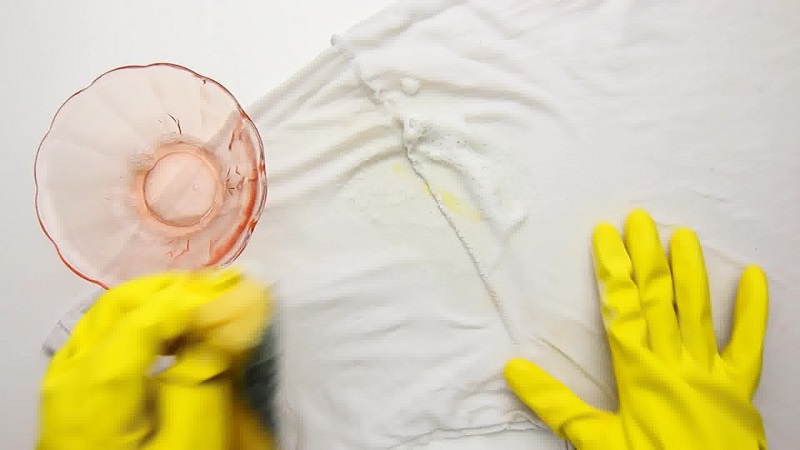
How to Wash Net Curtains and Voiles Without Turning Them Yellow
Compiled and fact-checked from cited sources, reviewed by our editorial team. · Last updated:
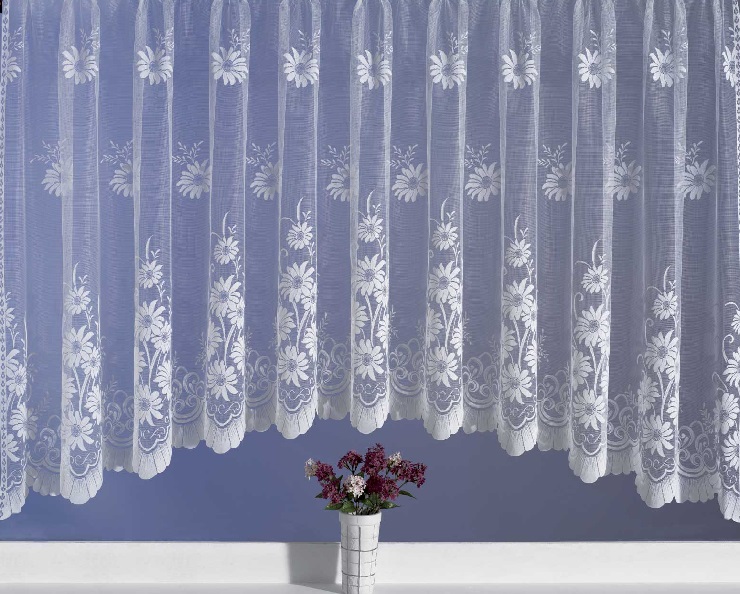
Three settings decide whether net curtains come out of the machine looking new or looking wrecked: temperature, spin speed, and which whitener you reach for. Get one wrong and you end up with nets that are permanently creased, an inch shorter, or yellower than when you started.
The last of those is the expensive mistake. Household bleach does not whiten nets. It destroys the thing that was making them look white in the first place, and the yellowing that follows is permanent. That mechanism is explained below, because “never use bleach on nets” is advice everyone repeats and nobody justifies — so people try it once more.4
First: can this particular net actually be washed?
“Net curtain” covers several very different fabrics in everyday English, and they do not behave the same way in water.
| Type | What it is | Machine washable |
|---|---|---|
| Classic net / polyester voile | Knitted or woven polyester | Yes — 30 °C, low spin |
| Linen-look voile | Polyester–linen blend | Yes at 30 °C; pure linen can shrink 3–5% |
| Organza | Stiffened polyester, sometimes silk | Polyester yes; silk is dry clean only |
| Lace or macramé panels | Fine open knit, easy to snag | Mesh bag only, delicates cycle |
| Beaded, sequinned, embroidered nets | Trims glued or stitched on | Hand wash — machines pull the trims off |
| Flocked nets (raised velvet pattern) | Pattern glued to the base cloth | No — water and friction lift the flock |
| Sheer roller blinds | Fabric stiffened with a coating | No — the coating dissolves |
| Vertical sheer louvres | Slats with chains and bottom weights | No — the slats never hang flat again |
Putting a sheer roller blind through a wash gives you a clean blind that no longer rolls straight: the edges curl and the fabric ripples. Those are cleaned in place instead, which I covered in the guide to cleaning roller blinds without ruining the fabric.
This guide covers sheers — nets, voiles, lace and organza. Heavy, lined, blackout and velvet panels follow entirely different rules, from differential shrinkage to cracking coatings; they are handled in the guide to washing lined and blackout curtains.
If the care label survived, read it. The number in the tub symbol is the maximum temperature; one bar under the tub means a reduced-action (delicates) cycle, two bars means very gentle. A crossed-out triangle means no bleach of any kind — including oxygen bleach.3
Temperature, cycle and spin
What temperature?
30 °C. The number is not arbitrary. Most nets are polyester, and wet polyester takes a permanent set when it is heated. A fold that forms in hot water is locked into the fibre as the water cools. Ironing will soften that crease but never fully remove it.
Push to 40 °C only for a white net that is genuinely grimy or smoke-stained, and keep the cycle short. At 60 °C and above you risk losing 2–4 cm of drop, and shrinkage in polyester does not come back.
Which cycle?
If your machine has a curtain or “net” programme, use it: it is short, low-temperature, low-spin and uses more water than usual. Otherwise, in order of preference:
- Delicates (sometimes labelled hand wash)
- Synthetics
- Failing both: 30 °C on the shortest programme with the spin turned right down
Switch on extra water and extra rinse if your machine offers them. Nets are bulky but absorb little, and detergent that is not rinsed away leaves a dull film on the fibres. That film is one of the most common and least recognised causes of greying.
Should you spin them?
“Never spin nets” is the standard advice and it is only half right. Hanging a soaking curtain puts real weight on the track gliders and the heading tape, and it drips onto whatever flooring is under the window. The practical compromise:
- 400 rpm for 1–2 minutes. Takes out the free water without creasing.
- If 400 is not selectable, turn the spin off and let the curtain drain over the bath for fifteen minutes.
- 800 rpm and above presses permanent fold lines into wet polyester. Most of the creasing people blame on washing actually happens here.
Loading the drum
- Fill the drum half full at most. Packed nets neither wash nor rinse properly.
- Do not bundle. Fold lengthways then across, concertina style, dirtiest surfaces facing out.
- Use a large mesh laundry bag, or a pillowcase knotted shut. A bag that is too small bunches the fabric into one corner and adds creases of its own.
- Take out hooks, rings and eyelets. Anything that will not come off should be wrapped and tied in a cloth — metal scratches both the fabric and the drum.
- Loosen the cord in the heading tape before washing and knot the ends so it cannot disappear inside.
- Vacuum the net on the lowest suction with a soft brush head before you take it down. Dust and hair that gets wet turns to grime and leaves marks.
Why net curtains go yellow
You cannot choose a whitening method sensibly without knowing which of these four is actually happening.
- 1. The optical brightener has diedNew nets look "whiter than white" in the shop because of an optical brightening agent — a fluorescent compound that absorbs ultraviolet and re-emits it as blue-violet light. Your eye adds that blue on top of the fabric's own yellow and reads the result as brilliant white. Sunlight degrades that compound over time. Once it is gone, polyester's natural faint yellow shows through. The curtain is not dirty; the thing making it look white has run out.
- 2. Tobacco smoke and sootTar and soot particles are oily. The open structure of a net traps them and they build into a yellow-brown cast that ordinary detergent will not shift. This one needs a degreasing pre-soak.
- 3. Detergent and limescale filmToo much detergent cannot be rinsed away. Combined with hard water minerals it leaves a matt film that scatters light and makes the net look grey. The tell-tale sign: the curtain comes out duller after every wash. The fix is less detergent, not more.
- 4. Chlorine bleachThe fastest and most permanent cause of yellowing. It gets its own section.
Why bleach makes it permanent
Sodium hypochlorite irreversibly decomposes optical brighteners, and it does so at concentrations far below what you would use in a wash.4 The moment that fluorescent layer is destroyed, the fabric’s true colour is exposed and no amount of washing brings the white back.
There is a second problem. Hypochlorite also oxidises the surface of polyester and nylon fibres, and an oxidised surface reads as yellow. That is why nets often look slightly better after one bleach wash and noticeably worse after the third — which is precisely when people reach for more bleach.
Rule: no chlorine bleach on nets, ever. Use an oxygen-based whitener instead.
Whitening yellowed nets: what actually works
Plenty of methods circulate. Some genuinely work, some do something other than what people think, and some do nothing at all.
| Method | What it actually does | Verdict |
|---|---|---|
| Oxygen bleach (sodium percarbonate) | Releases hydrogen peroxide, oxidises the organic soil causing the yellow | ✅ The one that works |
| Denture cleaning tablets | Sodium percarbonate plus citric acid — the same chemistry in tablet form | ✅ Works; expensive but convenient |
| Bicarbonate of soda | Mildly alkaline, helps the detergent lift soil | 🟡 Supporting act, not a whitener |
| White vinegar | Dissolves limescale and detergent residue, softens the handle | 🟡 Fixes greyness, not yellowing |
| Laundry bluing | Adds blue, the complement of yellow, so the eye stops seeing the yellow | ✅ Works visually — use a few drops only |
| Lemon juice | Citric acid; useful on limescale and rust marks | 🟡 Partial |
| Salt | Barely measurable effect on polyester | 🟠 Folk method |
| Hydrogen peroxide solution | The liquid form of the same chemistry as percarbonate | ✅ Works |
| Ammonia | Cuts grease and soot | ✅ Smoke-stained nets only, with ventilation |
| Chlorine bleach | Destroys the optical brightener | ❌ Permanent yellowing |
The soak that does the real work
Here is the detail almost every guide skips. Sodium percarbonate only releases a meaningful amount of active oxygen above roughly 40 °C unless the product also contains a TAED activator.2 Tip oxygen bleach into the drawer of a 30 °C cycle and most of it goes down the drain unreacted. So the whitening step happens in a bath or bucket, not in the machine:
- Fill a bath or large bucket with water at 40–50 °C — hot to the hand but not scalding.
- Dissolve three to four tablespoons of oxygen bleach per 10 litres of water completely before the fabric goes in.
- Submerge the net fully. A plate on top keeps it under.
- Leave it 1–4 hours. Badly yellowed nets can soak overnight, but there is no further gain once the water is cold.
- Rinse, then run a normal 30 °C delicates wash.
With denture tablets: three or four tablets per 5 litres of warm water, dissolved fully, nets left in for four to six hours or overnight. Same chemistry, pre-portioned.
Bluing: the old trick that still works
Laundry blue removes nothing. It adds blue, the complementary colour to yellow, so the yellow stops registering. It is the non-chemical equivalent of what the optical brightener in a new net was doing.
Dose matters enormously: a few drops per 10 litres of rinse water, dissolved in a cup of water first and then stirred into the rinse. Poured in neat it leaves blue blotches, and too much turns the whole net grey-blue, which is hard to undo.
Smoke-stained and heavily soiled nets
Soot from cigarettes or an open fire is oily. In a normal wash it redistributes rather than lifts, and the net comes out uniformly grey instead of white. The order matters:
- Start dry. Before taking the curtain down, vacuum both faces on the lowest suction with a soft brush head. How much soot you remove dry decides how much work is left.
- Do not rub it wet. Wet soot smears and leaves tide marks.
- Degreasing soak: half a cup of household ammonia, or two tablespoons of washing-up liquid, per 10 litres of warm water. Two hours. Open a window, and never mix ammonia with any chlorine product — it releases chlorine gas.5
- Rinse, then do the oxygen bleach soak described above.
- Finish with a 30–40 °C delicates wash.
If only the bottom hem is filthy — above a radiator, or in a kitchen — lather just that strip with washing-up liquid by hand and leave it fifteen minutes before the main wash.
Drying without creases
Creasing does not happen during the wash. It happens in three specific places: a fast spin, an overloaded drum, and wet fabric left sitting in the machine.
- Take them out the moment the cycle ends. Nets left damp in a drum is the single biggest cause of creasing.
- Rehang while still damp. The weight of the water pulls the fabric straight and the fold lines drop out on their own.
- Put a towel on the sill, or do that short 400 rpm spin, if dripping is a problem.
- No tumble dryer. The heat shrinks polyester and sets a permanent ripple.
- No direct sun, especially behind glass. Glass raises the temperature and concentrates ultraviolet exposure, which is exactly what kills the optical brightener. Dry in shade with air moving.
- Do not fold them away until completely dry — damp nets in a cupboard smell musty and develop water marks.
If you do need to iron
Most nets do not need it: hung correctly, they hang out within a day. If you must:
- Use the one-dot / synthetic setting (around 110 °C). Polyester glazes above that and then melts.
- Never touch the iron to the fabric — use a thin cotton pressing cloth.
- Press and lift; do not slide.
- Easier alternative: steam the curtain while it hangs, from 15–20 cm away, drawing it gently downwards with your free hand.
- Iron embroidered or beaded sections from the reverse.
Hand washing in the bath
For lace, embroidered panels, very old nets, or anything labelled hand wash:
- Fill the bath with 30 °C water and dissolve a little delicate detergent.
- Fold the curtain in and let it soak 20–30 minutes. Longer does not help and lets soil redeposit.
- Do not rub or wring — work with a press-and-release motion under water.
- Drain and rinse at least twice in clean water.
- Do not wring. Spread the net over the side of the bath to drain, then roll it in a towel and press.
Dry cleaning: when it is the right call
Send them out if they are silk organza, velvet, blackout-lined, flocked, heavily beaded, or if the label shows a circle with a P or F inside.
Before you book, settle two things that move the price more than anything else: whether taking down and rehanging is included, and whether pressing or steaming is included.
How often should nets be washed?
Washing too often wears the fabric; never washing lets soil bed into the fibres.
| Situation | Frequency |
|---|---|
| No smokers, quiet street, away from the kitchen | Every 6 months |
| Average town or city flat | Every 4–6 months |
| Main road frontage, dusty area | Every 3 months |
| Someone smokes indoors, or there is an open fire | Every 2–3 months |
| Kitchen nets exposed to cooking vapour | Every 3 months |
Vacuuming them once a month on low suction roughly halves how often they need a full wash.
Frequently Asked Questions
Can you wash net curtains in the washing machine? Ordinary polyester nets and voiles, yes — 30 °C, delicates, minimal spin, in a mesh bag. Flocked, heavily beaded, silk organza, sheer roller blinds and vertical louvres should not go in.
What temperature should net curtains be washed at? 30 °C is ideal and 40 °C is the ceiling. Hotter water shrinks polyester and sets creases permanently.
What cycle should I use for net curtains? A dedicated curtain programme if the machine has one, otherwise delicates, otherwise synthetics. Add extra water and extra rinse if available.
Should you spin net curtains? At most 400 rpm for one or two minutes. Anything from 800 rpm upwards presses in creases you will not get out. Draining them instead is also fine.
How do you whiten net curtains? Soak them in 40–50 °C water with oxygen bleach for one to four hours, then wash at 30 °C on delicates. For visual whiteness, a few drops of laundry blue in the final rinse.
Do denture tablets whiten net curtains? Yes, and not by accident — they are sodium percarbonate with citric acid, the same active chemistry as oxygen bleach. Three or four tablets per five litres of warm water, soaked overnight.
Can you use bleach on net curtains? No. Chlorine bleach irreversibly destroys the optical brightener that makes nets look white and oxidises the fibre surface. The result is permanent yellowing.
Will yellowed nets ever go white again? If the yellow is soil — smoke, soot, detergent film — oxygen bleach recovers most of it. If the optical brightener has simply worn out, nothing restores it chemically; you compensate optically with bluing or a “whites” detergent.
Should I use biological or non-bio, colour or whites detergent? Always a whites detergent on white nets: it contains optical brighteners and redeposits a little on every wash. Colour and dark detergents deliberately omit them, which is why nets washed in those go dull.
Does vinegar whiten net curtains? It does not touch yellowing. What it does do is dissolve limescale and detergent residue, so it helps nets that have gone grey and stiff. Half a cup in the final rinse.
Does bicarbonate of soda whiten nets? Only mildly, and indirectly — it raises the pH so the detergent works better. It is a helper, not a whitener. Oxygen bleach is the active ingredient you actually want.
How long should I soak net curtains? One to four hours for whitening; overnight for heavy staining. For an ordinary pre-wash soak, thirty minutes to an hour — longer lets soil settle back into the fabric.
Should net curtains be hung wet or dry? Damp. The weight of the remaining water pulls the creases out as they dry. Do a short low spin first if dripping is a concern.
Can you tumble dry net curtains? No. Dryer heat shrinks polyester and leaves a permanent ripple across the fabric.
Can you iron net curtains? Only on the synthetic setting, around 110 °C, with a pressing cloth, pressing rather than sliding. Steaming them on the rail is easier and safer.
Why did my nets shrink after washing? The water was too hot, or they went through a dryer. Heat shrinkage in polyester is permanent. Keep to 30 °C next time.
Why are my nets creased and wavy after washing? Almost always a fast spin, an overloaded drum, or wet fabric left in the machine. Rewetting them and rehanging damp fixes most of it.
Do I need to remove the hooks? Yes, ideally. Anything that will not come off should be wrapped in cloth and tied — loose metal tears fine net and scratches the drum.
Is a mesh laundry bag essential? For lace and fine voiles, yes. For plain polyester net it is optional but stops the fabric catching inside the drum. Choose one comfortably larger than the folded curtain.
Can I wash two curtains together? If they are the same colour and similar fabric, yes — but keep the drum half full. Never wash white nets with coloured ones; the slightest dye transfer shows instantly.
How do I get rid of mould spots on net curtains? An oxygen bleach soak lifts most surface marks, but black mould that has penetrated the fibre can be permanent. The real fix is the damp itself, plus never folding nets away before they are dry.
Can I freshen nets without washing them? Vacuum both faces monthly on low suction and air the room for half an hour. Fabric sprays mask odour without removing soil and leave residue over time.
Sources
- Textile Learner — Optical brightening agents: mechanism, fluorescence and UV degradation. https://textilelearner.net/optical-brightening-agents/
- PubMed Central — Activated sodium percarbonate bleaching and its temperature dependence. https://pmc.ncbi.nlm.nih.gov/articles/PMC9457162/
- Ginetex — International textile care labelling: washing, bleaching, ironing and professional care symbols. https://www.ginetex.net/
- American Cleaning Institute — Fibres unsuitable for chlorine bleach and permanent yellowing. https://www.cleaninginstitute.org/
- US EPA — Chlorine gas risk from mixing ammonia with chlorine-based products. https://www.epa.gov/