How to Clean Converse: Canvas, White, Black, Suede and Leather
Compiled and fact-checked from cited sources, reviewed by our editorial team.
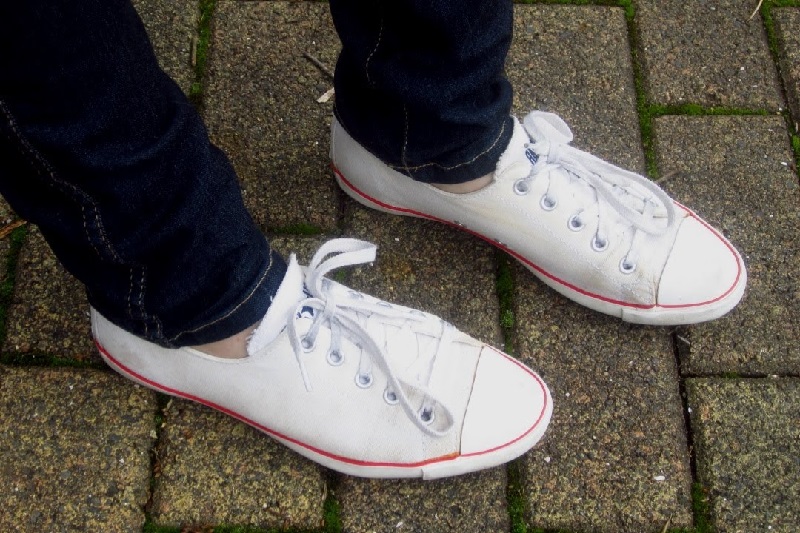
The thing people love most about Converse is also the thing they complain about most: thin cotton canvas and a bright white rubber sole show every shade of dirt. The good news is that cleaning them costs almost nothing. The bad news is that most of the tutorials online recommend the one thing the brand explicitly rules out — the washing machine.1
This guide is split by material, because canvas, white, black, suede and leather pairs are not cleaned the same way. It also covers whitening a yellowed rubber sole, laces, insoles and odour, and the drying step where most damage actually happens.
Start with the material
Not every Converse is made of the same fabric. The classic Chuck Taylor All Star is cotton canvas, but the same silhouette also sells in leather, suede, synthetic and mono versions. The generous, soapy approach that suits canvas will leave a permanent mark on suede.
- MethodLukewarm soapy water, soft brush
- Watch outToo much water leaves tide marks
- MethodLightly damp cloth + mild soap
- Watch outAcetone and alcohol crack the finish
- MethodDry suede brush, white eraser
- Watch outWater and soap set stains permanently
- MethodMelamine sponge, baking soda paste
- Watch outKeep it off the canvas
Three things to do before you start
1. Let mud dry first. Wiping wet mud grinds it into the weave. Once it has dried, knock the soles together and brush the rest off with a soft-bristled brush.
2. Take the laces and insoles out. Laces block soap and water from reaching the eyelets and the tongue, and they need separate attention anyway.3
3. Spot-test your solution. This is Converse’s own advice: try the cleaning solution somewhere hidden first — the outer edge of the tongue is ideal — and check that it does not affect the colour or the material.2 Never skip this on dark or printed pairs.
Canvas Converse: hand cleaning, step by step
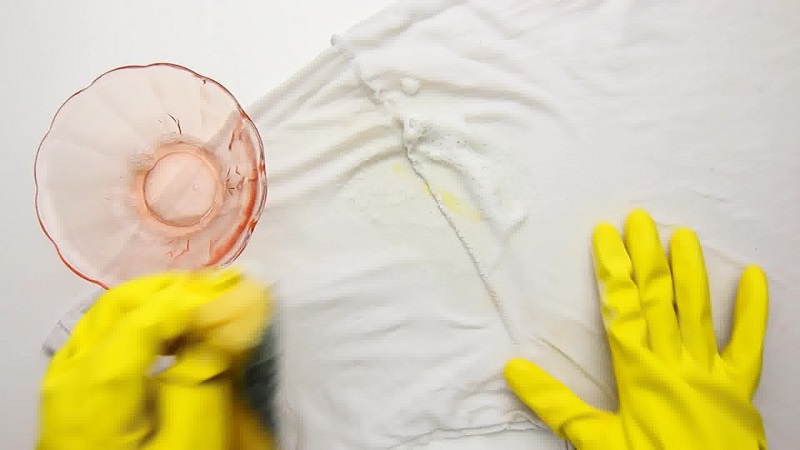
Ninety per cent of canvas Converse comes clean with lukewarm water and a few drops of dish soap. Dedicated sneaker cleaners work well, but they are not required. The American Cleaning Institute recommends the same sequence: take out the laces and inserts, scrub with a gentle detergent and a soft brush, rinse well, and let the shoes air dry.3
- Mix the solution. A bowl of lukewarm water with a few drops of dish soap or a mild laundry detergent. Avoid hot water — heat softens the adhesive that bonds the sole to the upper.
- Dry-brush the loose dirt. Get the grit and gravel out of the tread with an old toothbrush.
- Wet the cloth and wring it out hard. The cloth should not drip. Excess water soaks into the canvas and dries into a yellowish tide line with a visible edge.
- Work section by section. Toe, side panels, tongue, heel. Use gentle circular motions and rinse the cloth often in clean water.
- Bring in a brush for stubborn marks. Work the same solution into the stain with a soft-bristled brush. Canvas is tough, but a stiff brush will fluff up the weave. A fabric stain remover sprayed directly on the mark and left for a few minutes also works — just rinse the residue out afterwards.
- Grease first gets powder. For chain oil or food grease, sprinkle cornstarch or baby powder on the mark before any water, leave it at least half an hour, then brush it off. The powder pulls the oil out and what remains lifts far more easily.
- Rinse the soap away. Go over the whole shoe with a second cloth dampened in clean water. Leftover detergent dries to a chalky bloom and attracts dirt faster.
- Dry them in shape. Stuff them with paper towel and leave them at room temperature.
Why not newspaper? Newsprint ink transfers into damp canvas and leaves grey shadows, especially on pale pairs. The American Cleaning Institute specifically recommends white paper towels rather than newspaper for holding the shape.3
Laces: washed separately, dried separately
Wiping laces while they are still threaded is wasted effort; washed on their own they come back several shades brighter.
- Soak them for 15–30 minutes in hot water with a few drops of detergent.
- Scrub, rinse under running water, squeeze them in a towel and hang them up.
- Soaking damages the plastic tips (the aglets) over time and makes re-lacing harder. To protect them, drop the lace into a bottle so the cord sits inside and the tips stay out, then cap it and shake.
- Laces dry more slowly than canvas, so hang them somewhere separate rather than waiting on the shoes.
With grey, years-old laces the effort rarely pays off — a new pair costs very little and instantly lifts the whole shoe.
Whitening a yellowed rubber sole
White rubber turning yellow is not dirt, it is oxidation: the rubber reacts with air and ultraviolet light and changes colour. That is why scrubbing harder only takes you so far — you need something that lifts the colour chemically.
| Method | How to apply it | Best for |
|---|---|---|
| Melamine (“magic eraser”) sponge | Dampen lightly, wring out, rub the rubber | Scuff marks, everyday grey film |
| Baking soda + white vinegar | 2 parts soda to 3 parts vinegar, paste consistency, brush on, leave 20–30 min | General yellowing, sole edge |
| White toothpaste | Apply with a toothbrush, leave 10–15 min, wipe off with a damp cloth | Toe cap, small areas |
| 3% hydrogen peroxide | Mix into a paste with baking soda, apply, leave 1–2 hours | Broad yellowing, white canvas |
| Lemon juice | Rub on the mark, leave 15–20 min, rinse | Yellowish shadows on white canvas |
| Diluted bleach (1:5) | Rubber only, with a brush, in a ventilated room | Stubborn yellowing — read the warning below |
Mix the baking soda and vinegar in glass or plastic, never metal. Use white or cider vinegar; dark vinegars stain. Always wipe the area with a damp cloth afterwards, or the dried paste shows up as white powder.
Cleaning bodies are wary of bleach. The American Cleaning Institute advises against bleach, solvents and abrasives on sneakers.3 If you try it anyway, keep it diluted and on the rubber only: on canvas it yellows even white fabric and stains coloured fabric permanently. Never mix bleach with vinegar, ammonia or acid-based cleaners — the gas released is toxic. Open a window and wear gloves.
White Converse: two surfaces, two jobs
On a white pair, what people actually notice is the sole rather than the fabric. So split the job: canvas with soapy water, rubber with the whitening methods above. Trying to fix both in one go is the easiest way to get bleach on the fabric.
Yellowish shadows left on the canvas itself are usually old water marks. Mix baking soda with lukewarm water into a paste, spread it on the mark, leave it half an hour and lift it with a damp cloth. Another classic trick is to rub on lemon juice and leave it 15–20 minutes; the citric acid gives a mild lightening effect. Keep it to white pairs only.
Black and dark Converse: the job is protecting the colour
With dark pairs the problem is not dirt but fading and a dusty look. The rules invert:
- No bleach, lemon, hydrogen peroxide or toothpaste. All of them lighten, and on black canvas they leave grey patches.
- A sponge and lightly soapy water is usually enough for surface marks.
- Do not dry them in the sun. Ultraviolet light lifts dark fabric several shades. Dry them in the shade with good airflow.
- For salt stains — the white tide lines left by winter road salt — dab a mix of 1 part white vinegar to 2 parts water onto the mark with a cloth, then wipe with a clean damp cloth.
- Faded black canvas can be refreshed with fabric dye, but the rubber and stitching take dye differently, so results are rarely even.
Suede Converse: keep water away from it
Converse’s advice on suede is unambiguous — do not use water, lift loose dirt with a suede brush.1 Nike says the same thing: suede absorbs water, so it goes neither in the machine nor into a bowl of soapy water; the nap flattens and dries into a hard, shiny mark.4
- With the shoe completely dry, sweep the nap in one direction with a suede brush to lift dust and surface dirt. Start with the softer side and move to the stiffer one if needed.
- Rub remaining marks out with a white eraser (coloured erasers deposit pigment) or a dedicated suede eraser.
- For oil stains, sprinkle on cornstarch or talcum powder, leave it a few hours or overnight, then brush it out. The powder draws the oil up.4
- On stubborn spots, put white vinegar or rubbing alcohol on the cloth and dab the mark — never soak it. Once dry, raise the nap again with the brush.4
- If you get gum or wax on them, bag the shoe and put it in the freezer; once the residue hardens it peels or scrapes off.4
- A water- and stain-repellent suede spray applied when the shoes are new does more good than any cleaning you do later.
Leather and synthetic Converse
Converse gives canvas, leather and synthetic the same treatment: brush off the loose dirt, clean the affected areas with a lightly damp cloth and mild soap, then let them dry at room temperature.1 Wipe the soap residue off with a clean damp cloth and finish with a dry one. Once the leather is dry, a thin coat of leather conditioner slows down cracking.
Acetone, paint thinner, alcohol-based cleaners and oil-based products such as WD-40 leave permanent dull patches or peel the finish on leather and coated synthetics. Their place, if anywhere, is the rubber sole — and even there, sparingly.
Insides and odour
The inside of the shoe deserves as much attention as the fabric, because that is usually where the smell comes from.
- Wipe the footbed with a microfibre cloth dipped in the soapy solution and wrung out, then dry it thoroughly.
- Once dry, tip 1–2 teaspoons of baking soda into each shoe, leave it overnight, then shake it out and vacuum the rest. Baking soda absorbs moisture and odour together.
- If the insoles come out, wash and dry them separately.
- When the smell is moisture-driven, the real fix is rotation: not wearing the same pair two days running lets the damp evaporate completely.
Can you put Converse in the washing machine?
The brand says no. Converse states plainly that the shoes should not be machine washed and not go in the tumble dryer.2 The American Cleaning Institute also recommends hand washing for sneakers.3 The reasons are concrete:
- The drum stresses the adhesive holding the sole to the upper, and the sole edge lifts over time.
- Hot water and detergent accelerate yellowing of the rubber.
- Canvas shrinks as it dries, the shoe loses its shape and the heel creases.
- Metal eyelets can scratch the drum and the rest of the load.
Plenty of people have machine-washed their Converse for years and the shoes survive. If you accept the risk, this is how to limit the damage: take out the laces and insoles, put the shoes in a mesh bag or a pillowcase, add a few old towels to cushion the load, and run a delicate or trainers cycle at no more than 30 °C with a small amount of bleach-free detergent. Set the spin as low as it goes or turn it off, take them out as soon as the cycle ends, stuff them with paper and never put them in the dryer.
If the pair is new, expensive or a special print, the gamble is not worth it — hand cleaning takes twenty minutes.
Drying: where most of the damage happens
No radiators, ovens, hairdryers or tumble dryers. Direct heat softens the adhesive, hardens the rubber and shrinks the canvas. Converse recommends drying at room temperature.2
- Stuff them with paper so they hold their shape and draw out moisture; change it as it gets damp.1
- Put them somewhere with airflow, ideally propped at a slight angle.
- Do not dry them in direct sun. The American Cleaning Institute recommends letting sneakers dry naturally out of direct sunlight; sun fades dark colours and speeds up yellowing of the rubber.3 (Short sun exposure during a lemon or baking soda treatment is a step in the process, not a drying method.)
- Full drying takes 12–24 hours. Wearing them damp causes odour, and any soap left inside collects dirt immediately.
Popular hacks: which ones actually work?
The same handful of tricks circulates in every Converse cleaning video. They are not equally useful:
| Hack | What it really does | Verdict |
|---|---|---|
| Melamine sponge | Abrades scuff marks off the rubber physically | ✅ Excellent on rubber, pointless on canvas |
| Toothpaste | The baking soda in it acts as a mild abrasive | ✅ Use white paste, small areas |
| Baking soda + vinegar | The fizzing does nothing; the paste consistency does | ✅ Rubber and white canvas |
| Hairspray / baby powder | Absorbs oil as a pre-treatment | ✅ Grease stains only |
| Petroleum jelly | Softens grime, but is itself an oil | ⚠️ Rubber only; stains canvas |
| WD-40 | Dissolves sticky residue like tar | ⚠️ Rubber only, wash it off afterwards |
| Acetone / nail polish remover | Dissolves the finish along with the stain | ⚠️ Spot use on rubber; never on leather or canvas |
| Dishwasher | Hot water plus a drying cycle destroys the adhesive | ❌ Don’t |
| Neat bleach | Yellows even white fabric | ❌ Always dilute, keep off fabric |
What to avoid
- Stiff brushes and steel wool — they fluff canvas and scratch rubber.
- Hot water — stresses the adhesive and bleeds colour.
- Coloured or gel toothpaste — deposits dye on pale fabric.
- Acetone and thinners — ring-shaped marks on canvas, peeling on leather.
- Submerging the shoe — the lining and cardboard layer take days to dry and the shape suffers.
- Wiping wet mud — drives the dirt into the weave.
Material-by-material summary
| Material | Main method | Avoid |
|---|---|---|
| Canvas | Lukewarm soapy water, wrung-out cloth, soft brush | Hot water, submerging, stiff brushes |
| White canvas | Soapy water, baking soda paste on stubborn marks | Bleach on the fabric |
| Black / dark canvas | Sponge with mild soapy water, dry in shade | Any lightening agent, sun drying |
| Rubber sole and toe cap | Melamine sponge, baking soda–vinegar, toothpaste | Letting it spread onto the canvas |
| Suede / nubuck | Dry suede brush, white eraser, powder | Water, soap, soaking |
| Leather / synthetic | Damp cloth + mild soap, then conditioner | Acetone, alcohol, WD-40 |
| Laces | Soak in detergent solution and scrub | Cleaning them in place |
How often should you clean them?
For a pair worn daily, a dry brush once a week and a thorough clean once a month is a sensible rhythm. What really makes the difference is dealing with marks immediately: fresh dirt lifts with a damp cloth, three-week-old dirt needs chemistry. Treating a new pair with a water- and stain-repellent spray shortens every clean that follows.
Frequently asked questions
Can you put Converse in the washing machine? The brand’s official answer is no. The machine stresses the sole adhesive, speeds up yellowing of the rubber and shrinks the canvas. If you do it anyway, remove the laces, use a mesh bag, run a delicate cycle at no more than 30 °C with a little detergent, and never use the tumble dryer.
Why do Converse soles turn yellow? It is oxidation rather than dirt: white rubber reacts with air and ultraviolet light and changes colour over time. Scrubbing alone will not fix it — you need a lightening method such as baking soda and vinegar paste, a melamine sponge or diluted bleach on the rubber.
How do you whiten yellowed Converse soles? Make a paste from 2 parts baking soda and 3 parts white vinegar, brush it onto the rubber, leave it 20–30 minutes and wipe it off with a damp cloth. White toothpaste or a baking soda and hydrogen peroxide paste are alternatives, applied to the rubber only.
Can suede Converse get wet? No. Converse advises against using water on suede, and Nike notes that suede absorbs water, which sets stains into the material. Use a dry suede brush, a white eraser, and cornstarch for oil stains.
Can you use bleach on black Converse? No. Bleach is a lightening agent and leaves irreversible grey patches on black canvas. Dark pairs need nothing more than a sponge and mild soapy water; for salt marks use 1 part vinegar to 2 parts water.
How long do Converse take to dry? At room temperature, stuffed with paper, a pair usually dries in 12–24 hours. Speeding it up with a radiator, oven or hairdryer damages the adhesive and the rubber.
How do you get rid of the smell in Converse? Once the shoes are dry, tip 1–2 teaspoons of baking soda into each one, leave it overnight and shake it out. Wash removable insoles separately and avoid wearing the same pair two days in a row — the smell usually comes from moisture that never fully dries.
How do you whiten Converse laces? Take them out, soak them for 15–30 minutes in hot water with detergent, scrub them with a brush, rinse and hang them to dry. Baking soda helps on white laces; if they are badly aged, replacing them is the practical answer.
Are genuine and replica Converse cleaned the same way? The method is the same, the durability is not. A genuine Chuck Taylor’s cotton canvas and vulcanised sole handle wetting and drying better; on cheap copies the sole is usually glued and can lift at the edge even in soapy water. Use less water on a replica pair and never submerge it.
With children in the house, shoes are rarely the only stubborn stain: dried slime on carpet or a sofa comes out with the same logic — harden it, scrape it, dissolve it with vinegar. The step-by-step version is in our guide to getting dried slime out of carpet.
Sources
- Converse — How to Clean Your Converse Shoes. https://www.converse.com/c/how-to-clean-converse-shoes
- Converse Support — Shoe care and cleaning. https://destek.converse.com.tr/hc/tr/articles/22782890368145
- American Cleaning Institute — Ask ACI: Sneaker Cleaning in the Washing Machine or By Hand. https://www.cleaninginstitute.org/cleaning-tips/clean-home/ask-aci/ask-aci-sneaker-cleaning-washing-machine-or-hand
- Nike — How to Clean Suede Shoes. https://www.nike.com/a/how-to-clean-suede-shoes