How to Get Dried Slime Out of Carpet, Couch, Clothes and Fabric
Compiled and fact-checked from cited sources, reviewed by our editorial team.
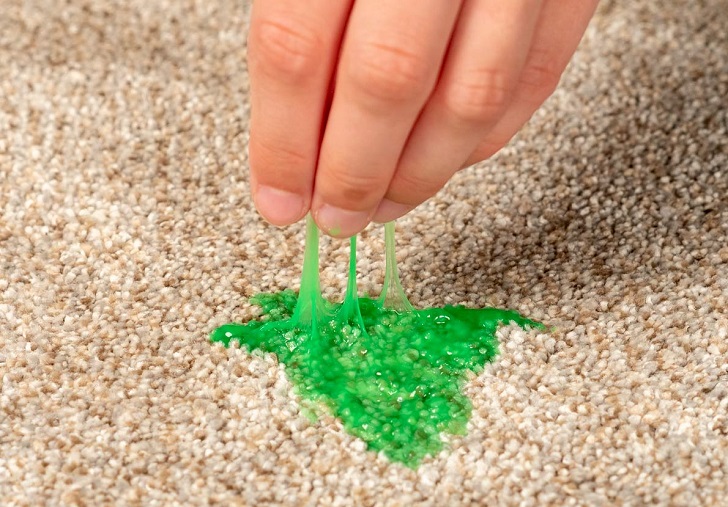
Once slime settles into carpet pile or couch fabric it dries rock hard, and pulling at it takes the fibres with it. The good news: you do not need a special product. White vinegar from the kitchen and rubbing alcohol from the medicine cabinet handle about 90% of it. What matters is the order: harden it, scrape it, dissolve it — and never rub.
This guide covers getting slime out of carpet, upholstery, clothes and fabric separately, plus the dye stain that often stays behind and awkward surfaces like hair and wood. At the end there is an answer to the opposite question too: how to soften dried slime and make it playable again.
Why slime grips so hard
The backbone of homemade slime is PVA glue (white school glue). When borax, contact lens solution or a bicarbonate liquid is added, borate ions link the long glue molecules together with cross-links, turning a runny liquid into a stretchy gel.2
Two practical consequences follow:
- Water alone will not do it. A cross-linked network does not dissolve in water; it only swells.
- Acid and alcohol will. The acetic acid in vinegar loosens those borate links, and alcohol softens the glue itself. That is why both turn slime back from gel to liquid.
What changes when it dries? The water evaporates and leaves a hard glue film that is mechanically locked into the carpet yarn. So dried slime is two jobs: lift the physical mass first, then chemically dissolve the film underneath.
The golden rule: scrape, blot, never rub
The universal rule of carpet and upholstery cleaning applies here. The Carpet and Rug Institute’s spot protocol is clear: gently scrape up semi-solids with a rounded spoon, apply the solution to a white cloth rather than pouring it on the carpet, work it in without rubbing, and always move from the edge of the spot towards the centre — the other way spreads it.1
Spot-test somewhere hidden first. Try the solution on a carpet edge, the back of the couch or an inside seam, and wait five minutes. If colour transfers, drop that method. Be especially careful on wool carpet: wool is sensitive to acid, so keep the solution weaker and don't let it sit.
Four methods, and when each one fits
- What it doesMakes slime brittle so it comes off in pieces
- WhenThick slime sitting on the surface
- What it doesLoosens the borate links and dissolves residue
- WhenFirst choice on nearly every surface
- What it doesSoftens the glue film and evaporates fast
- WhenWhere vinegar stalls; always colour-test
- What it doesLifts lotion-based residue and odour
- WhenFinal rinse and clearing cleaner residue
Getting dried slime out of carpet
- Lift the bulk. Scrape gently with a rounded spoon or an old credit card. If it is rock hard, hold a bag of ice on it for 10–15 minutes; frozen slime turns brittle and chips off. Do not use the sharp edge of a knife — it cuts the loops.
- Mix the solution. 1 part white vinegar to 1 part warm water. For very stubborn residue you can use vinegar undiluted, but colour-test first.
- Apply to the cloth, not the carpet. Dip a white cloth, wring it out and press it onto the spot. Excess liquid sinks into the backing and causes mildew underneath.
- Leave it 10–15 minutes. Vinegar needs time to break the links. Re-wet the cloth if it dries out.
- Work the base of the pile with a toothbrush. Light circular movements — the aim is not to scrub the fibres but to bring the dissolving residue up.
- Blot it away. Press with a dry white cloth or paper towel. Keep turning to a clean face for as long as slime transfers.
- Rinse and dry. Wipe with a cloth dampened in warm water, then press dry with a towel. Laying paper towels on top with a weight pulls out the remaining moisture.1
- Vacuum once dry to lift the pile back up.
One round may not finish it; 2–3 rounds is normal on thick slime. As long as the spot shrinks each round, you are on the right track.4
If you own a carpet cleaner and the slime is still fresh, extracting it after the scraping step is usually enough on its own. With dried slime the vinegar step comes first — a machine will not lift hardened residue, only what has already been dissolved.
Couch and upholstery
Same logic, different water budget. If the foam underneath gets wet it stays damp for days and starts to smell.
- Lift the bulk with a spoon; ice works even better here because the fabric is stretched tight.
- Spray the solution onto the cloth, never directly onto the couch.
- Repeat press–wait–blot, turning to a clean face of the cloth each time.
- Check the care tag. An “S” means the fabric is not suitable for water-based cleaners: use an alcohol-based spot treatment only. “W” allows water-based, “WS” allows both.
- On napped fabrics such as velvet or suede, wet methods leave pile marks; dry scraping plus alcohol spot work is safer.
Clothes and fabric
Here you have an advantage: you can soak the fabric directly.
- Pick off the dried slime with a fingernail or spoon edge; stretching the fabric makes it crack loose.
- Soak the spot in white vinegar for 5–10 minutes. For thick residue, go up to 30 minutes.
- Rub under warm running water while the vinegar is still wet; the dissolving particles wash away.
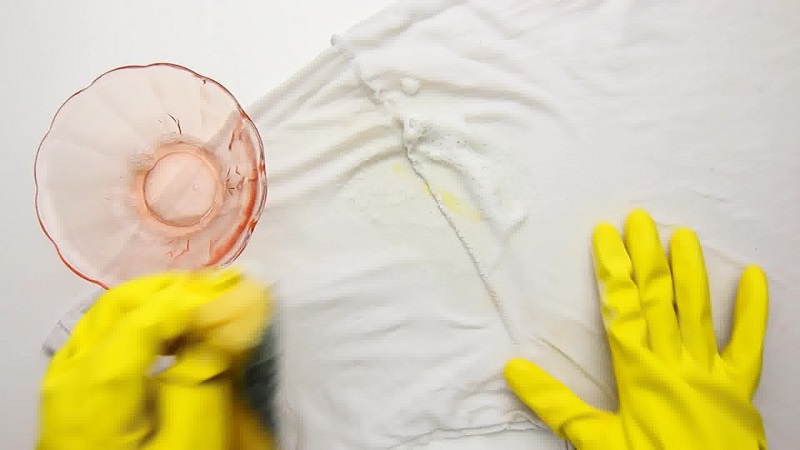
- If a mark remains, work in a few drops of dish soap with your fingers and leave it 5 minutes.
- Wash on the hottest cycle the care label allows.
- Check before the tumble dryer. Heat sets any leftover glue permanently — if the stain is not fully gone, air dry and repeat.
If slime got on shoes, the same logic applies; for canvas construction and the right cleaning order, see our guide to cleaning Converse and canvas shoes.
When a colour stain is left behind
Slime is gone but the carpet has a pink, blue or green shadow? That is no longer slime — it is food dye, and it is a separate job:
| Surface | What to use | How |
|---|---|---|
| Light carpet | 3% hydrogen peroxide | Soak a cloth, press 10–15 min, rinse |
| White cotton | Oxygen-based stain remover | Soak 1–4 hours in warm water at label strength |
| Coloured fabric | Oxygen-based, short soak | Colour-test; do NOT use chlorine bleach |
| Upholstery | Spot work, diluted peroxide | Test in a hidden area, avoid over-wetting |
Never mix bleach with vinegar or ammonia. The gas released is toxic. Chlorine bleach also causes irreversible lightening on coloured carpet — on carpet the product of choice is an oxygen-based one.
Other surfaces
| Surface | Method | Watch out |
|---|---|---|
| Hair | Coat generously with conditioner or cooking oil, separate with fingers, then shampoo. Vinegar works too but the smell lingers | Don’t drag a comb through it — hair breaks |
| Skin | Warm water and dish soap; a few drops of oil for residue | No stiff brushes |
| Wood furniture / flooring | Lift with a plastic scraper, wipe with warm soapy cloth, dry immediately | Vinegar can dull the finish — try soapy water first on wood |
| Laminate / tile | Vinegar solution, then a dry cloth | Don’t leave water in the grout lines |
| Car upholstery | Same steps as carpet, less water | Don’t leave it damp in a closed car |
| Painted wall | Damp cloth with a little detergent, pressing | Rubbing burnishes or removes paint |
| Plastic toys | Soak in hot soapy water | No difficulty at all — the easiest surface |
| Mattress | Scrape, alcohol spot work, dry | Do not soak; the foam will not dry |
What not to do
- Rubbing. It drives the slime between the fibres and mats the pile.
- Pouring boiling water on it. It softens the glue but pushes it deeper; warm water is enough.
- Acetone or paint thinner. It melts synthetic carpet fibres and upholstery coatings.
- Stiff or wire brushes. They permanently damage the pile.
- Tumble-drying the stain. Heat sets whatever glue is left.
- Repeating one method five times over. If two rounds bring no progress, the method is wrong — switch from vinegar to alcohol.
How to soften dried slime and play with it again
Up to here we treated slime as a stain. The other much-searched question is the opposite: does hardened slime have to be thrown away? Usually not. Slime hardens because it loses water; give the moisture and oil back and most of it recovers.3
Starting with what works best:
- Warm water. Put the slime in a bowl, add a couple of tablespoons of warm water and knead. Add it gradually — too much turns slime into a sticky mess.
- Hand lotion or moisturiser. A hazelnut-sized blob, kneaded in, repeated if needed. It softens and adds shine.
- Glycerine. A tablespoon noticeably restores stretch in hardened slime; available at pharmacies.
- Shaving foam. One squirt kneaded in fluffs the slime up and softens it.
- Hand sanitiser gel. A few drops loosen stiff slime. Too much backfires: alcohol softens slime first, then breaks it apart. Go drop by drop.
- Just knead it. The warmth of your hands alone helps; five minutes of continuous kneading often makes the difference.
Throw slime away when: there are pink, black or green mould spots on the surface, it smells sour or musty, or it crumbles into powder when kneaded. None of that is reversible. Also stop using any slime that makes skin red or itchy, even after softening it.
Note: if slime has gone too soft and sticky, you need to go the other way — a few drops of contact lens solution or a very small amount of bicarbonate liquid rebuilds the cross-links. Add tiny amounts here too, or the slime turns stiff and rubbery.
Keeping slime off the carpet in the first place
- Contain play to a wipeable oilcloth, plastic tablecloth or a large tray.
- Play in a room without carpet; a kitchen floor is the most practical spot.
- Store it in airtight containers with the lid pressed shut; slime left open both dries out and spills.
- Check hands and the rim of the tub when play ends — most carpet accidents come from bits breaking off the rim.
- Act the moment it happens: fresh slime is far easier to remove than dried slime.
Frequently asked questions
How do you get dried slime out of carpet? Harden it with ice first and scrape with a rounded spoon. Then soak a white cloth in a mix of 1 part white vinegar to 1 part warm water, press it on the spot for 10–15 minutes, work the base of the pile gently with a toothbrush, and blot it away with a dry cloth. Thick spots may need 2–3 rounds.
How do you remove the stain dried slime leaves? The slime itself comes out with vinegar or alcohol. If a coloured shadow remains, that is food dye: use 3% hydrogen peroxide on light carpet and an oxygen-based stain remover on fabric. Chlorine bleach causes permanent lightening on carpet.
How do you get dried slime out of a couch? Same method, far less water. Do not spray the solution onto the couch — spray the cloth and work by pressing. If the care tag says “S”, skip water-based cleaners and use alcohol spot treatment only.
How do you get dried slime out of clothes and fabric? After lifting the residue, soak the spot in white vinegar for 5–10 minutes, rub under warm water while the vinegar is still wet, pre-treat with dish soap if needed and wash at the hottest temperature the label allows. Do not tumble-dry until the stain is fully gone.
Vinegar or alcohol — which is better for slime? Start with vinegar: cheaper, the smell fades and it is safe on most fabrics. If vinegar makes no progress in two rounds, switch to 70% isopropyl alcohol. Alcohol dissolves faster but can bleed some carpet and upholstery dyes, so a hidden spot test is essential.
Does hot water remove slime? Not on its own. Slime is a cross-linked gel and does not dissolve in water; it only swells. Warm water helps soften residue, but the dissolving is done by vinegar or alcohol. Boiling water drives the glue deeper into the fibres.
Will a carpet cleaning machine remove slime? With fresh slime it usually will. With dried slime, scrape and dissolve with vinegar first — the machine extracts what has been dissolved, it does not break up hardened residue.
How do you soften dried slime? Knead in a small amount of warm water, hand lotion, a tablespoon of glycerine or a squirt of shaving foam. Add a little at a time. Hand sanitiser also softens it, but too much breaks the slime apart.
Can dried slime be saved, and when should it go in the bin? If it has only dried out, most slime recovers with moisture and lotion. But if there are mould spots, a sour or musty smell, or it crumbles when kneaded, it should be thrown away.
What if slime gets in hair or on skin? For hair, coat generously with conditioner or oil, separate with your fingers, then shampoo; dragging a comb through breaks hair. For skin, warm water and dish soap are enough, with a few drops of oil for residue.
How do you get slime off wood furniture? Lift it with a plastic scraper, wipe with a warm soapy cloth and dry immediately. Don’t make vinegar your first choice on wood — the acid can dull the finish. If residue persists, use a little alcohol as spot work and dry the area straight away.
Does slime damage carpet permanently? Not if you go about it correctly. Permanent damage usually comes from the wrong response: rubbing mats the pile, a sharp blade cuts the loops, acetone melts the fibres, and too much water causes mildew in the backing.
Sources
- The Carpet and Rug Institute — Spot Solver: spot removal protocol. https://carpet-rug.org/spot-solver/
- American Chemical Society — Adventures in Chemistry: Slime (polymer cross-linking). https://www.acs.org/education/whatischemistry/adventures-in-chemistry/experiments/slime.html
- Elmer’s — Slime: product and usage information. https://www.elmers.com/slime
- The Carpet and Rug Institute — Spot Solver: Glue. https://carpet-rug.org/spot-solver/glue/